Sale Is Not About Pushing- It’s Understanding the Customer’s Mindset
Sales Is Not a Product Conversation It Is a Customer Understanding Journey That Builds Trust and Long-Term Relationships

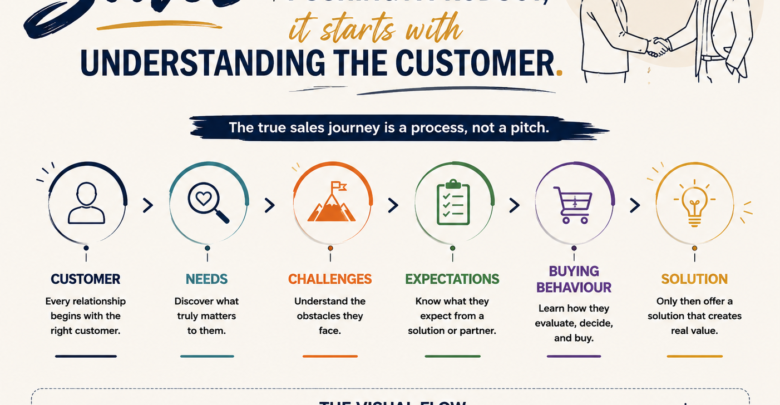
There’s a moment every salesperson knows. The customer picks up the product, turns it over, puts it down, and says, “I’ll think about it.” And right there, in that split second, most salespeople make a mistake that costs them the sale they push harder. They repeat the price benefit, mention the discount again, or worse, they follow the customer to the door with one more pitch.
What they don’t realize is that the customer didn’t say no. The customer said, I don’t feel understood yet.
This is the single biggest misconception in selling that sales is about persuasion, about pushing a product until someone gives in. In reality, sales has never been about pushing. It has always been about understanding. The best salespeople in the world aren’t the loudest or the most aggressive. They are the ones who listen the closest.
The Old Model Is Dying
For decades, sales was taught as a battle of wills. Convince, counter every objection, close the deal, move to the next customer. This model worked when customers had limited access to information when the salesperson was the gatekeeper of knowledge, and the customer had no choice but to trust whatever was said across the counter.
That world doesn’t exist anymore. Today’s customer walks into a showroom already knowing the specifications, already comparing five other brands on their phone, already aware of the discount being offered at the store next door. Information is no longer scarce. What’s scarce now is genuine understanding a salesperson who actually listens instead of reciting a script.
When a customer feels pushed, their brain does something very specific: it activates resistance. Psychologists call this reactance the instinctive pushback that happens when someone feels their freedom to choose is being threatened. The harder you push, the harder the customer’s mind pushes back, even if the product genuinely suits them. This is why aggressive selling so often backfires. It’s not that the product was wrong. It’s that the approach triggered defense instead of trust.
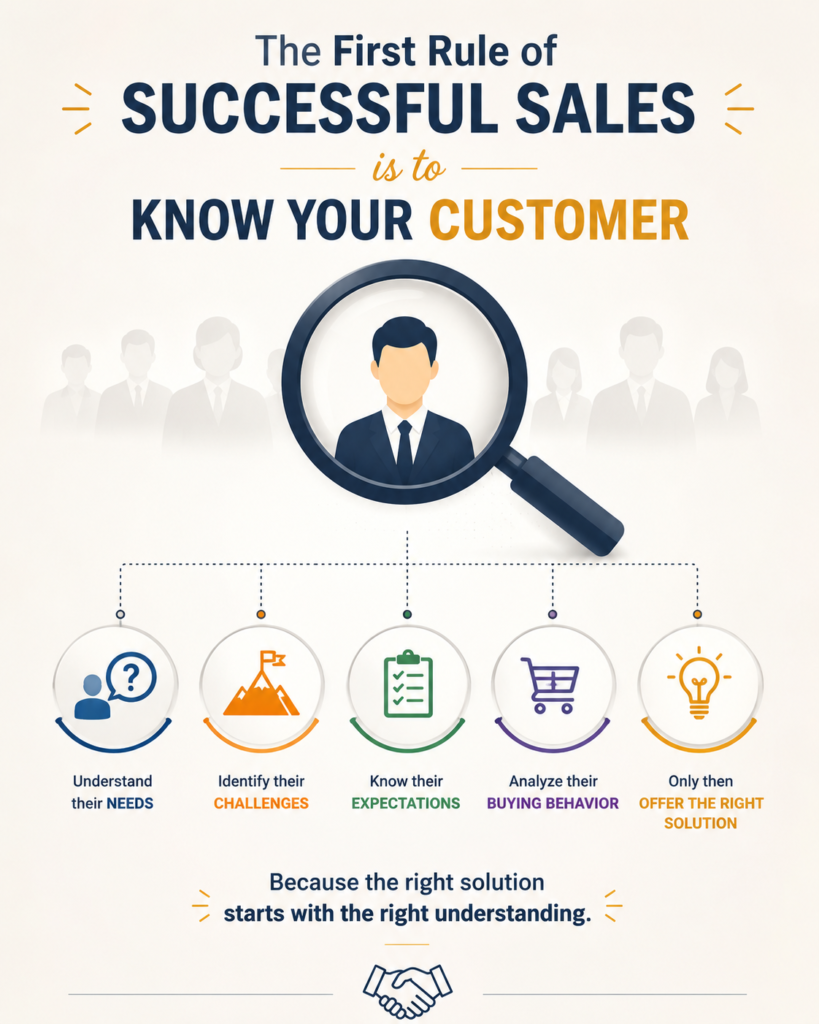
What Understanding the Mindset Actually Means
Understanding a customer’s mindset isn’t a soft skill you use to sound nice. It is a completely different way of approaching the sale, built on three questions that most salespeople never actually ask themselves before they open their mouth.
What is this customer actually afraid of? Every purchase carries a hidden fear. Someone buying a mattress might be afraid of spending money on something that turns out uncomfortable in a month. Someone buying insurance might be afraid of being cheated by fine print. Someone buying a recliner for their elderly parent might be afraid of choosing something that looks good in the showroom but doesn’t actually ease their parent’s back pain. The product is never just the product — it’s a solution to an unspoken worry. A salesperson who identifies that fear and addresses it directly earns more trust in thirty seconds than a salesperson who talks about features for ten minutes.
What does this customer need to feel, not just know? Facts inform, but emotions decide. A customer doesn’t buy a sofa because it has high-density foam they buy it because they can picture their family gathered on it during a festival evening, comfortable and at ease. A customer doesn’t buy a chair because of its ergonomic design they buy it because they can imagine their father finally getting relief from the back pain that’s kept him up at night. Numbers justify a decision after it’s made. Emotion is what makes the decision in the first place. Selling without understanding the emotional need is like handing someone a map without telling them where they actually want to go.
Where is this customer in their decision journey? Not every customer who walks in is ready to buy today. Some are just starting to explore. Some have already decided and are simply confirming their choice. Some are comparing this store against three others they visited yesterday. Pushing a first-time visitor toward an immediate purchase, the same way you’d close someone who’s already decided, is a mismatch that damages trust. Reading where a customer stands and adjusting the pace accordingly, is what separates a salesperson who builds long-term relationships from one who burns through leads.
Listening Is the New Pitch
There’s an old sales principle that still holds true: the customer will tell you exactly how to sell to them, if you let them talk. Most salespeople spend eighty percent of the conversation talking and twenty percent listening. The ones who consistently outperform their targets do the opposite.
When a customer says, “I’ve had back problems for years,” that single sentence is worth more than any prepared pitch. It tells you what to emphasize, what to avoid, and what outcome actually matters to them. A skilled salesperson doesn’t rush past this comment to get to the next talking point they pause, ask a follow-up question, and let the customer feel heard. “How long have you been dealing with it?” “Is it worse when you sit for long periods?” These aren’t just polite questions. They are data points that shape the entire rest of the conversation, and they signal something even more important to the customer: that this isn’t a transaction, it’s a conversation about solving their actual problem.
This is where trust is built not in the pitch, but in the pause. Not in what the salesperson says, but in what they choose to ask.
The Discount Trap
Many businesses believe the fastest way to close a sale is to offer a discount. And discounts do work but only in the short term, and often at a real cost. When a customer buys because of a price cut rather than because they understand the value of what they’re buying, two things happen. First, they become price-sensitive forever, always waiting for the next sale before purchasing again. Second, and more damaging, they never develop trust in the brand only in the deal.
Understanding-led selling works differently. When a customer buys because they feel the product genuinely fits their need because someone took the time to understand their situation the relationship doesn’t end at the billing counter. That customer refers friends and family. That customer comes back for the next purchase without needing a discount to justify it. That customer becomes an advocate, not just a transaction. This is the real, lasting difference between selling on price and selling on understanding.
The Salesperson as a Translator
Perhaps the most useful way to reframe sales is this: a great salesperson is not a persuader. They are a translator. They take what a customer vaguely feels discomfort, uncertainty, an unspoken need and translate it into a clear solution the customer might not have been able to articulate on their own.
A customer might say, I just want something comfortable. A good salesperson translates that into a specific question: comfortable for how long each day? Comfortable for what activity watching television, reading, resting after a long work shift? Comfortable for one person, or does the whole family need to feel that way? This translation process is where real value is created. It’s not manipulation. It’s clarity, offered generously, without an agenda beyond genuinely helping the customer arrive at the right decision.
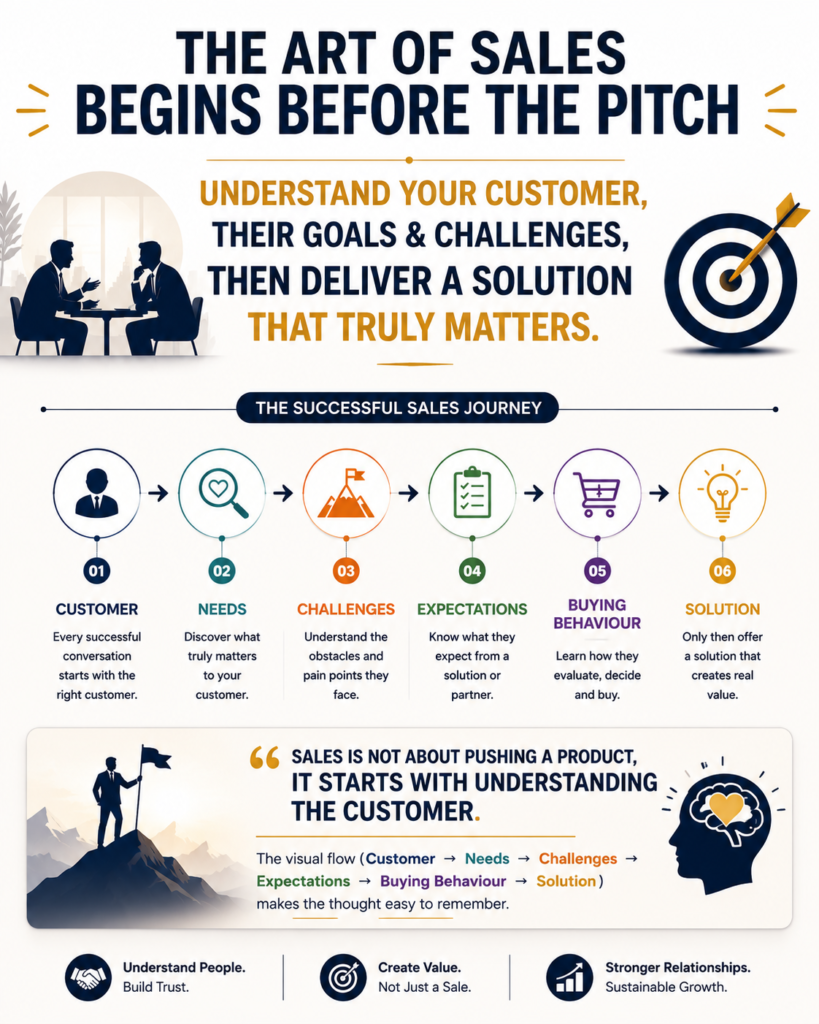
Selling Is an Act of Understanding, Not Force
The businesses that will thrive in the years ahead are not the ones with the loudest pitches or the deepest discounts. They are the ones that train their teams to listen before they speak, to ask before they assume, and to see every customer not as a target to be closed, but as a person with a specific worry, a specific hope, and a specific life that the right product can genuinely improve.
Sale, in its truest form, was never about pushing. It was always about understanding deeply, patiently, and honestly. The salesperson who grasps this doesn’t just sell more. They build something far more valuable: a customer who trusts them enough to come back.