
Generative Engine Optimization (GEO)-Navigating the AI-Powered Search Revolution


GENRATIVE ENGINE OPTIMIZATION (GEO)
In today’s digital landscape, where AI chatbots like ChatGPT and Perplexity are reshaping how we discover information, traditional SEO is no longer enough. Enter Generative Engine Optimization (GEO) – a cutting-edge strategy that’s transforming content visibility in the age of generative AI. This isn’t just a tweak to old tactics; it’s a fundamental shift. In this article, we’ll dive deep into what GEO really means, why it’s more complex than SEO, and how brands and creators can harness it for maximum impact. Whether you’re a marketer, content creator, or business owner, understanding GEO could be the key to staying relevant in an AI-dominated world.
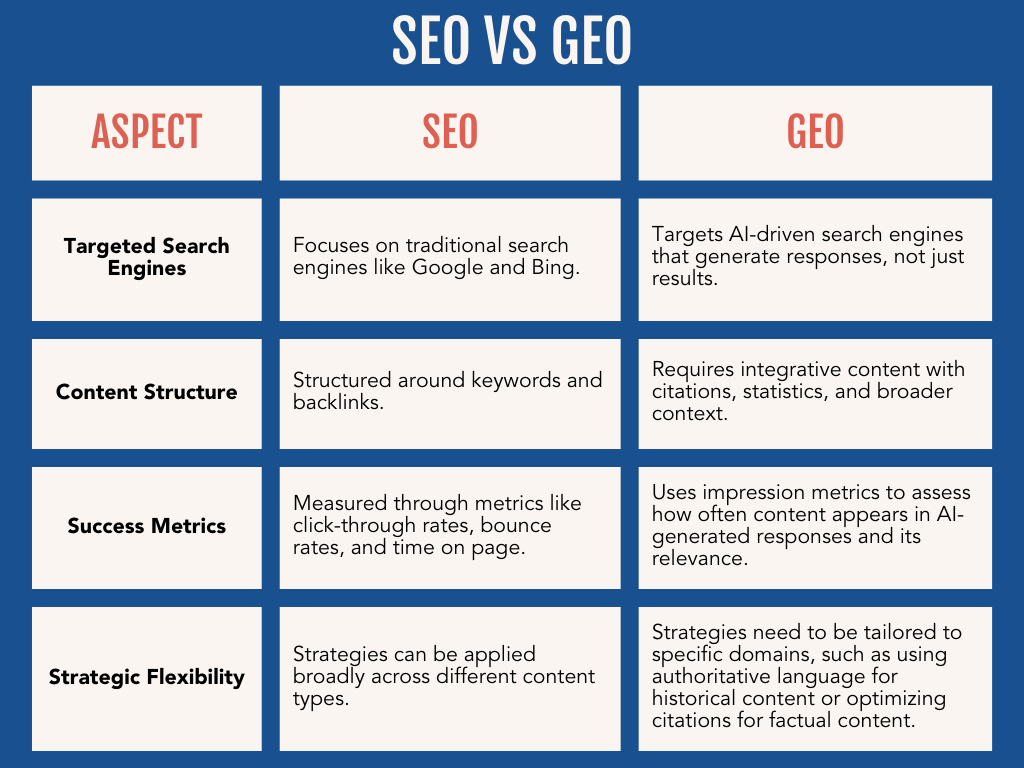
What in the World is Generative Engine Optimization (GEO)?
Imagine asking an AI a question and getting a synthesized answer that pulls from various sources, complete with citations. GEO is the art and science of optimizing your content so it gets featured prominently in these AI-generated responses. Unlike traditional search engines that list links, generative engines like Google Gemini or Claude create conversational summaries, and GEO ensures your site or brand is cited as a reliable source.
At its core, GEO involves making your content AI-friendly: think structured data, authoritative language, and elements that LLMs (large language models) love, such as statistics and expert quotes. The goal? Boost your “impression share” in AI outputs, driving traffic and trust.
Why GEO Is Not Just SEO 2.0 (It’s Way More Complicated)
If SEO is about climbing the ranks on Google’s SERPs through keywords and backlinks, GEO is like playing chess in a multidimensional arena. AI doesn’t just rank; it remixes and interprets content, making optimization a black-box challenge.
For starters, visibility metrics are fluid ,your content might appear as a top citation in one engine but buried in another’s summary. Factors like contextual relevance, source diversity, and even the AI’s training data play huge roles. Plus, tactics must adapt to specific platforms: Perplexity prioritizes real-time data, while ChatGPT leans on baked-in knowledge. And unlike SEO, where algorithm updates are periodic, LLM tweaks can render strategies obsolete overnight.
How Generative Engines Actually Work
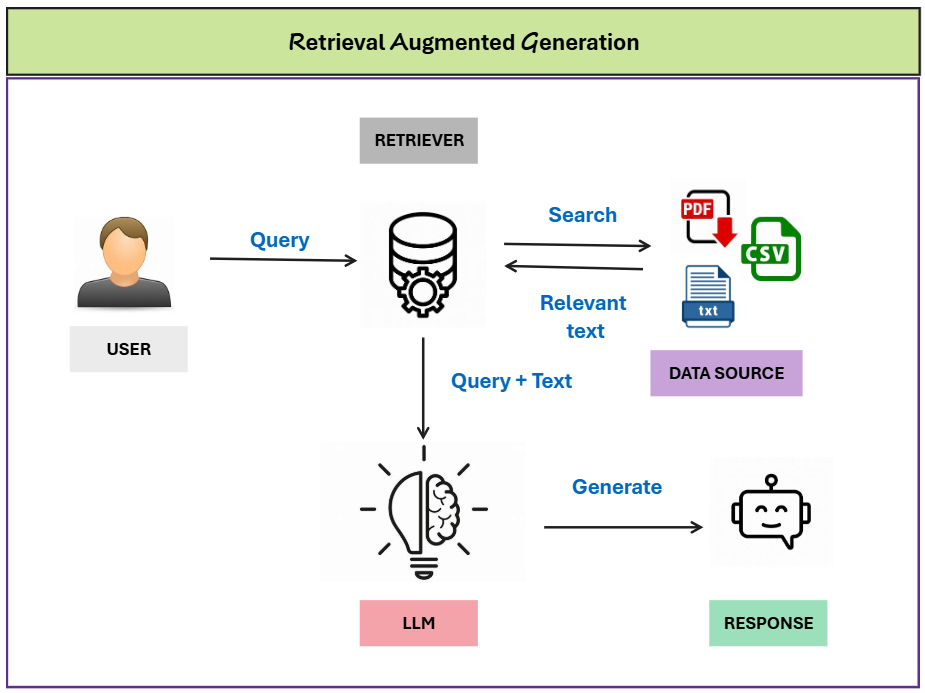
Under the hood, most generative engines rely on Retrieval-Augmented Generation (RAG), a process that combines search with AI creativity:
Query Retrieval: The user’s question triggers a semantic search across the web or indexed data, pulling in relevant snippets.
Context Building: These snippets are fed into the LLM along with the query.
Response Generation: The AI crafts a natural-language answer, often with citations for transparency.
Not all engines are equal – some, like Perplexity, use live web data for freshness, while others like base ChatGPT draw from pre-trained knowledge (which can lead to errors or hallucinations). Understanding this helps tailor GEO strategies.
GEO: A Brave New World for Content Creators and Brands
GEO democratizes discovery. Independent bloggers can eclipse corporate giants by embedding verifiable facts and quotes, while brands can shape narratives in AI summaries – think of it as free endorsement. Studies show AI-referred visitors convert up to four times better, and early GEO adopters have seen visibility jumps of over 40%.
It’s a world where quality trumps quantity, rewarding creators who prioritize depth and credibility.
GEO-Bench: The Ultimate Playground for GEO Enthusiasts
Born from a groundbreaking 2023 research paper (refreshed in 2024), GEO-Bench is a robust testing ground with 10,000 real-world queries spanning domains like tech, health, and finance. Sourced from datasets like MS MARCO and Perplexity, it lets you experiment with optimizations and measure lifts in metrics like Position-Adjusted Word Count.
Tests reveal that simple tweaks can boost visibility by 37-40% on platforms like Perplexity. Dive in via Hugging Face at GEO-Optim/geo-bench it’s a must for serious optimizers.
Should Brands Invest in GEO?
Absolutely. With AI traffic surging 300% in recent years and projections showing LLMs overtaking traditional search by 2028, ignoring GEO risks obsolescence. It safeguards your brand story, enhances trust, and counters traffic dips from AI overviews.
Tactical Solutions for Brands to Appear in Generative AI Without Major Expenses
No big budget? No problem. Implement these cost-free wins:
Audit pages: Add stats, quotes, and citations.
Build author profiles with schema.
Secure spots on high-authority sites like Wikipedia or Quora.
Update titles and URLs for recency.
Use sitemaps and AI-friendly directives like llms.txt.
Track progress with free AI tools and refine.
These steps can yield quick visibility gains.
The Future of Content in the Age of Generative AI
As AI evolves, content will pivot toward citable, human-centric pieces that emphasize originality and E-E-A-T. Metrics will shift to AI citation rates and narrative control. Creators embracing GEO today – through experimentation and multi-channel presence – will dominate tomorrow’s ecosystem.
GEO complements SEO; it’s the evolution. Test these strategies on your key pages, and watch your AI footprint grow. What’s your first GEO move? Share in the comments below!
Practical GEO Strategies to Boost Your Visibility
Ready to get started? Here are proven, low-lift tactics from GEO research:
- Add Citations and Sources: Link to reputable references to build trust.
- Incorporate Quotes: Feature expert opinions for quotability.
- Infuse Statistics: Swap fluff for data-backed claims.
- Optimize for Authority and Fluency: Write persuasively yet accessibly.
- Simplify Language: Break down complex ideas.
Beyond basics:
- Target citation gaps in competitor content.
- Leverage UGC platforms like Reddit for community signals.
- Craft comparison guides (e.g., “Best X vs. Y”).
- Refresh content with timely updates.
- Implement schema markup and author credits.
- Ensure AI crawlability with static pages and no blocks.
- Structure as Q&A for direct answers.
Article BY – Reputation Management Consultant – Raajesh Kumar Singh



I was suggested this blog by my cousin to learn GEO in AI Era. I am not sure whether this post is written by him as no one else know such detailed about my troublle You are incredible! Thanks!